Signing the Quiet parts out loud
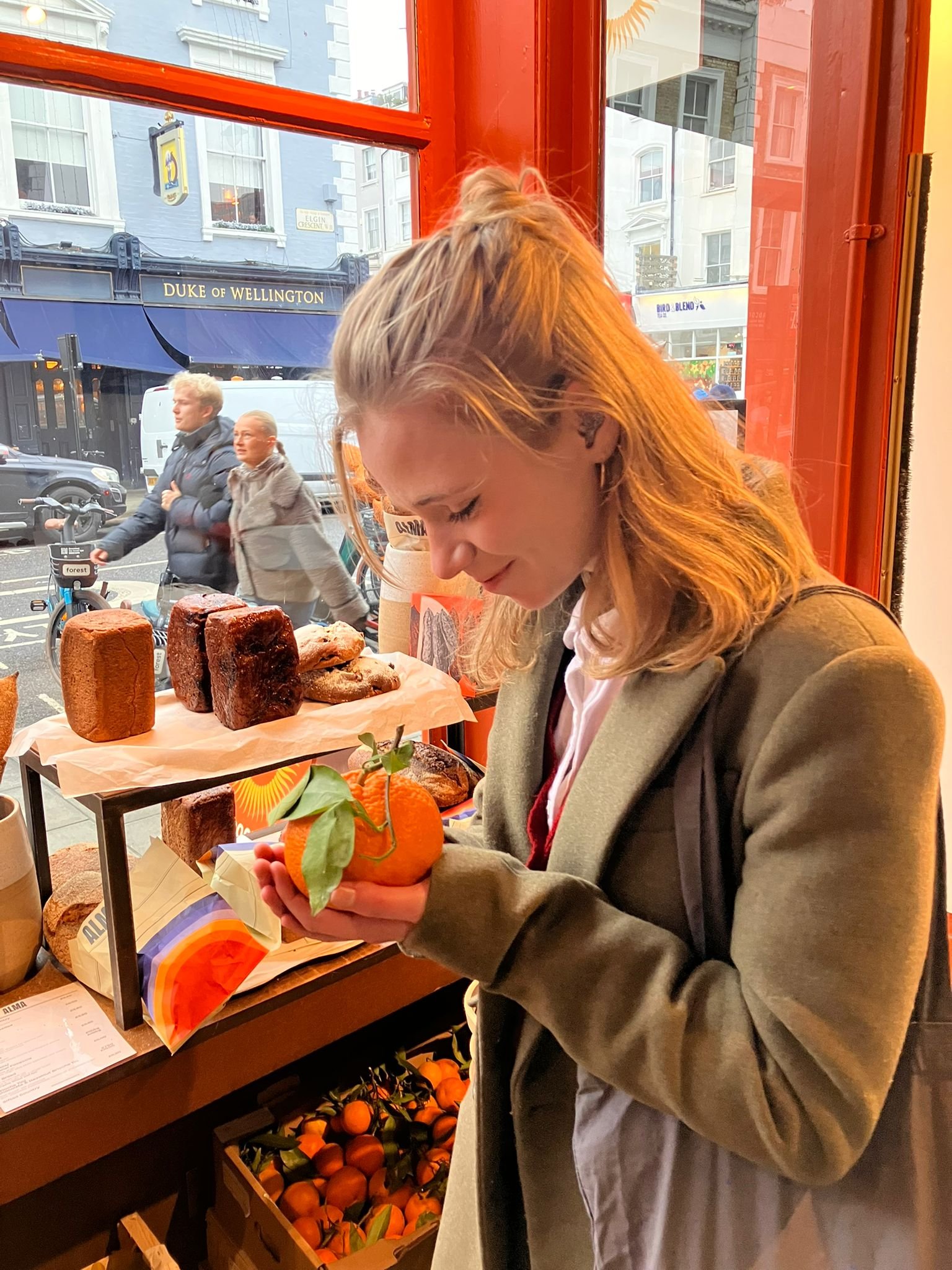
My wonderful boyfriend recently captured the moment I found a spectacularly massive orange - what a perfect moment of love for something that has grown so big, thriving in the sun of a much hotter place than England.
Ironically, I’ve started this blog at the most difficult time for me to write. 2025 for me, has made me realize how easy it is to be silenced by fear in all its multitudes.
I know I’m not perfect, I work hard, and sometimes ideas don’t work; but I usually see fantastic value in moments where things have had to change, and I have experienced how it changes the course of all of our work for the better. For me, the process of picking myself up, taking time, and trying again has actually led me to create work I would not have been able to imagine before. Work that stems from what it means to be human, to always adapt and grow.
In writing my second-year essays, I couldn’t stop a steady stream of tears dripping onto my keyboard. People who don’t know me might misdiagnose this as perfectionism, as I rewrote draft after draft of the reflective essays that every student needed to write after completing a performance on stage.
It was far from perfectionism. The nature of what I had to “reflect” on was what broke me. How do I write about my process of development when it was cut into pieces by discrimination and ignorance that I couldn’t control? Whilst I was encouraged to adapt and grow alongside every other student on the course, my growth was stunted when I found that the university was not prepared to adapt and grow with their first Deaf drama degree student.
“- So what happened?”
This part is explained with the highest care to share my experience, whilst not going into detail to protect current staff members and peers who work at York St John University.
Context: I am the first Deaf student doing a Drama-related Degree at York St John University. That in itself meant I worked incredibly hard to pass every single module in the first and second years of my degree, in a degree and a university, that is so heavily catered towards hearing students. I love my degree, and the people I have worked with, and if this portfolio is any proof, I hope it shows how passionate I am about the arts, and how I believe it is so important for me to pursue it.
Talking to my lecturers and the disability team throughout the second year made me realise how much their hands were tied when it came to making the course an equal, equitable and accessible experience for me. I deeply appreciated that they had the right intentions, but they were not given the funding, resources, time or power to carry out those intentions of equality and equity into long-lasting accessibility (even when the solutions were frustratingly simple and seemingly within reach). As a result, they struggled to respond to many forms of discrimination and inequality that I was subjected to, even when I did the work to come up with solutions.
It was suggested to me by more than one person that the complaints process would be the last remaining option for potentially freeing up the resources we needed to improve my experience in the third year and to put in place proactive measures to reduce the chance of the same issues happening again.
I worked incredibly hard on writing an empathetic and constructive review of my two years of experience with all the solutions I have suggested before, with examples and evidence of why they are needed. I had the sole intention of helping guide improvement. I did all this whilst also balancing full-time education in my second year.
The university confirmed that they received my documents on May 6th 2025. My family and I hoped to reach a resolution quickly so that I could continue on to the third year with my peers. I moved into my third-year accommodation early, optimistic that I could continue my studies.
What I didn’t know was that the complaints process would be a form of torture. The university would not take the same amount of care, attention to detail, or empathy towards me; I quickly realised their aim was to minimise any responsibility or effect on themselves.
The university dragged out the investigation, without any sense of urgency for me to continue my studies. I was left stranded in a student accommodation that I was paying for, unable to join my cohort for the third year because the university still had not agreed to make my third year Deaf-accessible. I was instead registered as a suspended student. This is not what I, my lecturers or my peers wanted.
During this process, I have experienced being sat in a 3-hour interview where I was told my advocate was not allowed to speak. I was asked if I had “read the inclusion policy written by the university” I replied that I assumed Deafness and disability were included in the inclusion policy. What followed was a whole series of questions where they tried to pinpoint one person to blame - I replied that this was a systemic issue that needed to be addressed with training, and more resources as the issues extended to university life as well as studies. Afterwards, the investigative team decided to thoroughly investigate me rather than themselves and the issues I wanted them to address. In sending me their misguided findings which, among other distressing information, included how they agreed with a member of staff's opinion that I did not need a BSL interpreter, despite me having Disability Student Allowance funding for BSL interpreters, using BSL as my preferred language, and being diagnosed as legally Deaf from a very young age.
When we asked the university to review their investigation, they continued to actively avoid or deny the issues I wanted them to actually investigate. Instead I was issued a backhanded apology (which I did not ask for), somehow arriving at the conclusion to apologise for accepting me as a student two years ago, claiming that it was “overpromising” to accept a Deaf student on this course.
This is just a small amount of what I have experienced. I don’t even know how to begin with articulating the rest.
It’s been a long year of feeling like I’m being punished, or put on trial, or in exile, for asking to have equal and equitable access to my course as a Deaf student, while I watch my hearing peers continue without me.
“So what happens now?”
A question I have asked myself often;
As of now, the complaints process continues through the OIA (Office of Independent Adjudicators) in an external investigation, which will question the University’s investigation and final verdict.
Worryingly, I know my experience is not unique. My Deaf friends who are at Universities all over the UK have faced similar prejudices, ignorance and discrimination on their own journey. Not everyone has the resources, energy, and safety to speak out in the hope that the path will be smoother for the next Deaf student.
I don’t have the answers but I can do what I can with my experience - and dare to speak (aka sign) the quiet parts of our experiences out loud. I needed to put what this is - what I’ve experienced, somewhere; Not hidden in a book, or emails, or lost in the silence of someone who doesn’t know what to say back.
So I’ve put it here. In the quiet start of a new chapter, in amongst fear in all its multitudes.
Writing this has been a present to myself right before Christmas. Allowing myself to exist, to have a voice, to hope that there is a reason for all the ideas scribbled in books; waiting for a day when they might be useful.
I have taken enough time to look at the situation. I am starting to pick myself up and try again.
Here’s to preparing for better years to come, for all of us.
-Francesca
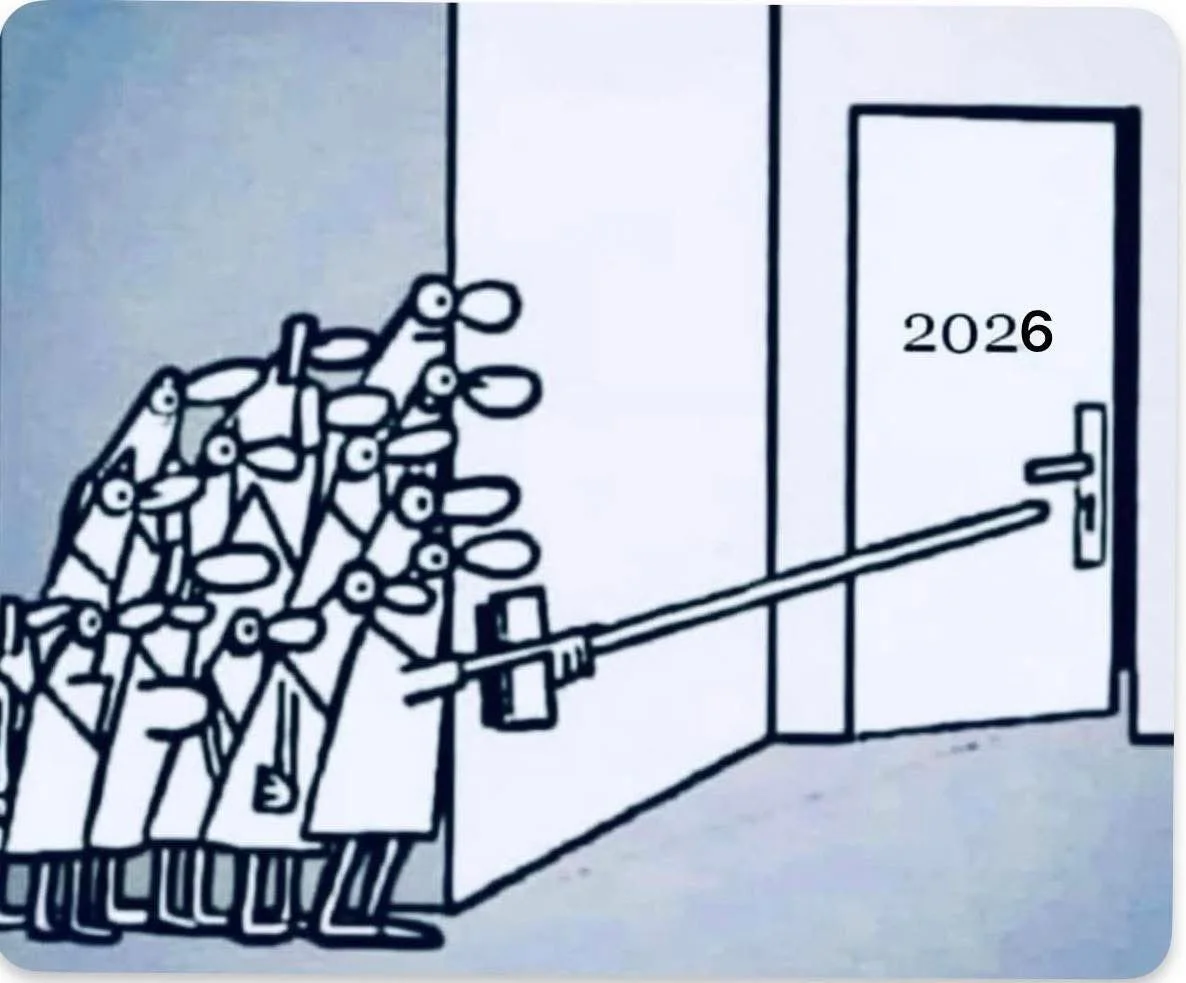
I would love to know who drew this fantastic comic - this was sent to me by my mother’s friend, and it made us laugh so much! I know 2025 has been scary for all of us in different ways, lets hope there’s a broom long enough to poke doors of opportunities open!